Chow Chow Africa guides
Buying a Chow Chow Puppy
The Chow Chow puppy is absolutely fascinating and enchanting, and to the inexperienced they all look of the same quality! However, remember that this cuddly little ball of fluff is going to grow up into a solidly built, sometimes very heavily coated dog with very strong opinions on how to live life!
 The Chow Chow's lifespan averages 8 - 16 years, therefore
you want to be sure that you are choosing your pup well.
It is very important to know what you want, before you even start
contacting breeders. And know without fail, that there are many
scammers and there are people out there breeding puppies purely for perceived profit.
The Chow Chow's lifespan averages 8 - 16 years, therefore
you want to be sure that you are choosing your pup well.
It is very important to know what you want, before you even start
contacting breeders. And know without fail, that there are many
scammers and there are people out there breeding puppies purely for perceived profit.
Are you looking at a pet Chow? Do you want a show dog? Do you intend breeding with your Chow? What lifestyle do you have? Is your property fenced? Who will take the responsibility to groom the dog? Can you afford the kind of food that best suits the breed's needs?
Selective, responsible breeding is time-consuming and very costly! Expect the concerned breeder to ask many questions, and feel free to raise your own concerns.
Where can you source good quality pups and responsible breeders?
Find a listing of KUSA registered breeders on this website, visit dogshows, ask the Kennel Union of Southern Africa (KUSA) for a list of names, enquire of Breed Clubs, and of course there is also the Internet and the printed media. In all instances we remind you - 'Caveat Emptor' - BUYER BEWARE!
Responsible breeders are those who certify their breeding stock for the various inherited health concerns that can be present in the Chow Chow. These breeders make a concerted effort to minimise the chances that your Chow will have major health concerns. As perfection does not exist, individual breeders have set themselves certain limits as to what failings they will accept in their breeding program. They breed responsibly for the sake of the future of the Chow Chow as a breed, not for profit.
Choosing
a Chow Chow as a Pet:
Start off with the decision that if you acquire a Chow Chow strictly as a pet, you will have it spayed/neutered as soon as recommended by your veterinarian. To discourage the tendency of folks saying they'd like a pet quality Chow - in order to pay less - and then actually breeding that pet, you will find responsible breeders have a similar price for pet and show quality pups, with individual arrangements based upon the assesment of each pup. Because of all the effort & money going into improving Chow Chows as a breed, registered dogs will usually be considerably more expensive than back-yard bred chows.
Pet quality pups are those pups that have breed faults which should not be perpetuated. Some faults are: spotted tongue, light coloured nose/eyes, drop ears, one/no testicles, over/under shot bite (misaligned teeth) or simply too 'light' or too 'heavy' in bone or head.
Choosing
a show and breeding Chow Chow:
If
you understand that showing and breeding your Chow Chow takes time,
money and a heavy toll on emotions, even more so if you're ethical
about breeding, then continue reading.
Firstly understand that you are buying a prospective show/breeding dog. At this age, the best a breeder can do is to select a promising specimen. No breeder can guarantee that no problems will develop. What actually is agreed upon to do, should the pup develop serious conditions, is up to both breeder and buyer and it should always be put in writing at the time of purchase of the pup. Whilst co-ownerships or other purchase contracts can make it possible for you to own a top quality Chow without having to 'pay' the initial full price, be careful of any such 'deals' as they can lead to much unhappiness if not fully understood by both parties and if not set out in a clearly worded contract.
When scouting for a good quality show and breeding chow chow puppy, we encourage you to first thoroughly study the Chow Chow History and Breed Standard and then to visit various shows and/or kennels and see what style of Chow is correct and what appeals to you. It is most important to know the health issues that face the breed today and how these will affect your showing and breeding plans.
Please bear in mind that SADBA (SA Dog Breeders Association) and other such registry bodies' registered chows may not be shown at championship shows held under KUSA rules & regulations, nor can SADBA chows or their pups be registered with KUSA. However, KUSA registered chows and their pups may be registered with SADBA and other such bodies.
Read more about the
KUSA Pedigree...
Visit the KUSA
Website...
What to look for when buying a pup:
(Pet or Show)
What do you need to know about breeders selling "health tested chow chow puppies"?
This can be a very misleading statement which you need to clarify with the breeder as to it's meaning for that breeder. Definitely ask: "Health tested for which health concerns? How was it 'tested' and by whom?" If certified, what are the results (ie clear or not).
One common selling technique uses the words "health testing/health certification". This simply means you can buy a puppy which has had it's vaccinations done by a veterinarian (for which you get a vaccination certificate) and at the same time checked by the vet for any current signs of health problems or apparent genetic abnormalities.
However, in Chow Chows, of the four commonly done KUSA acknowledged health certifications (eyes, patellars, hips, elbows), the only health certification (not just claimed 'testing'!) in Chow Chows which could have been done on an 8-12 weeks old puppy - is a basic eye examination done by the Specialist Veterinary Eye Hospital (not available at a normal vet). Patellars, hips and elbows health certification for chow chows are only done after 12 months. (ie the parents of your puppy). When certified CLEAR in at least one parent (not just 'health certified'), this means that your puppy has a smaller chance of developing these hereditary conditions. Insist on buying puppies only from parents which have had, at the very least, health certification (not just 'testing') done on hips and elbows. Be sure to note that "excellent/good" health certification results is subject to a breeder's interpretation and may not necessarily indicate that it has been certified clear in every health test done. Trust breeders who are transparent with certification results, even when not all clear of everything.
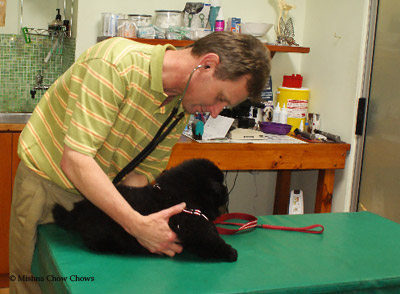 The
pup should be clean, have bright, alert eyes, no discharge from
eyes or nose. The mouth should be clean. The pups should not have
a distended belly, not fat, but should be in good condition. Depending
on the time of day it should be playful and full of fun - though
usually very sleepy around the heat of the day! The ears can be
up or down, but generally speaking will be up by 3 months of age.
The ears must be clean. The coat should be in very good condition.
There should be no signs of ringworm or other skin irritations/infections. Pups
are clumsy, but it should have no discomfort in getting up from
sitting or lying down. It should have no discomfort moving. If
slight entropion (curling of the eyelids) is already present, it will only get worse, and
in pricing the pup, the breeder should have taken into account
the operation you will need to do, to correct the problem. It may not be overtly friendly but should not show outright aggression
The
pup should be clean, have bright, alert eyes, no discharge from
eyes or nose. The mouth should be clean. The pups should not have
a distended belly, not fat, but should be in good condition. Depending
on the time of day it should be playful and full of fun - though
usually very sleepy around the heat of the day! The ears can be
up or down, but generally speaking will be up by 3 months of age.
The ears must be clean. The coat should be in very good condition.
There should be no signs of ringworm or other skin irritations/infections. Pups
are clumsy, but it should have no discomfort in getting up from
sitting or lying down. It should have no discomfort moving. If
slight entropion (curling of the eyelids) is already present, it will only get worse, and
in pricing the pup, the breeder should have taken into account
the operation you will need to do, to correct the problem. It may not be overtly friendly but should not show outright aggression
The mother will not be in good condition, as she has given her all to the pups so expect to find her fairly thin and having lost most of her coat. You should at least be able to see pictures of the father too.
Do not buy a puppy which has not
received it's first vaccination and deworming at 6-8 weeks, done by
a qualified veterinarian (NOT the breeder).
Make sure you receive a valid vaccination certificate as proof!
Do not be led
to believe that colour, show records, imported parents guarantee you a quality puppy or should command the
top price in the country. Nobody can guarantee the health or show
quality of a puppy.
Do not be led
to believe that anyone can accurately predict if a pup will have / or not have health issues. Do not believe anyone who says they have done 'health testing' for hereditary conditions on puppies unless a certificate is provided from a specialist veterinarian. If the parents are not certified, your pup has stronger chance of developing problems.
It is good to take the pup between the ages of 7 - 12 weeks of age. Best around 8 - 10 weeks, as this is the time it forms it's first strong bonds.
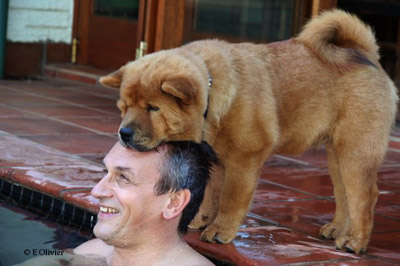
At the time of purchase you should receive your puppy's KUSA registration certificate or sign a contract stating that the breeder will provide it within a specified time period. The registration papers should be signed on the back by the breeder. (Read more about the KUSA Pedigree...). Make sure the breeder informs you if there are breeders' restrictions (a KUSA restriction) on the puppy. You should also receive the puppy's vaccination/deworming certificate. The breeder should tell you where the pup spent his nights, what his feeding schedule has been and what kind of food he was reared on. Most likely you will receive a puppy pack with samples of this food and other recommended products.
On taking the puppy home:Firstly you should take the pup to your trusted veterinarian within 48 hours of purchasing it, for a meet-and-greet and general check-up. If there is any concern do raise it with the breeder as soon as possible. You may want to consider microchipping your puppy at this point in time if it has not already been microchipped. Always handle the puppy gently, remember, he is in unfamiliar territory.
Be sure to puppy-proof your home! The most common reason for puppy deaths is drowning in a swimming-pool, so do take care! Check for toxic plants and electric wiring lying at puppy-level. Beware of theft! Chow puppies get stolen, often! Its water and feeding bowls should be of stainless steel. It should have plenty of soft toys and chewies to play with, and you should introduce a lead and collar fairly early.
 Please
remember that KUSA registered breeders may not
sell to, or through, a third party - which means that
you should not be able to buy a KUSA registered puppy
from a petshop, a puppy-trader nor anyone other than
the breeder of that puppy. This is to place the responsibility of breeding dogs
healthy in body and mind, in a the hands of a person
who truly loves the Chow Chow. If a person wants to breed
without accountability for what they are doing,
you encounter situations where puppies are bred
for profit or because "the children must experience a litter" or
because of the misconception that the bitch must
have at least one litter before she is spayed.
Please
remember that KUSA registered breeders may not
sell to, or through, a third party - which means that
you should not be able to buy a KUSA registered puppy
from a petshop, a puppy-trader nor anyone other than
the breeder of that puppy. This is to place the responsibility of breeding dogs
healthy in body and mind, in a the hands of a person
who truly loves the Chow Chow. If a person wants to breed
without accountability for what they are doing,
you encounter situations where puppies are bred
for profit or because "the children must experience a litter" or
because of the misconception that the bitch must
have at least one litter before she is spayed.
Ever heard the expression - "you get what you pay for"? This has proved true, way too often , when buying chow chow puppies at a cheap price. Neither the fact that it is (un)registered, nor imported, nor show ring achievers, nor the cheapest, nor the most expensive are indicative of quality or proper rearing. Be an informed buyer - know what you are letting yourself in for when buying any chow chow puppy. Registered breeders who do no health certification & offer very little support after the purchase should not charge the same price for a puppy as those who do healthtests & offer lifetime 'after sales support'. By going to the expense of doing health certification on the parents & preferably grand-parents, the responsible breeder strongly increases your possibilities of having a healthy puppy.

Please be extremely careful when buying a chow chow as a pet for a child. Do not make the mistake thinking that buying "just a pet" means it is fine to buy the cheapest/first available Chow Chow. Buying a pet quality Chow is not buying a reject - it's quality is as important as buying a show dog! It must be sound and healthy with good hopes of staying that way - able to live a normal life (supported by health certification of it's parents and in it's pedigree). Of course it must look like a Chow (look at chows in it's certified official pedigree.) and it must have a good temperament! Beware of claims to health 'testing' only (not certifying). Your only proof that health tests have accurately been evaluated by a person knowledgable in his/her field is official certification - which will then appear on your puppy's pedigree papers. Health certificates should be avaialble for your perusal before making your decision to purchase.
Beware of so-called 'Bargain Puppies' and unregistered puppies!
Cheap puppies are raised cheaply for sale at as large as possible
a perceived profit or just because the owners were too careless
to prevent the litter from happening or wanted 'a quick profit'. This can, and mostly does,
lead to heartbreak, including problems and vetbills, which all
add up to the initial expense of buying a properly reared dog. The breeder
choosing to breed unregistered chows is avoiding accountability
completely and is interested only in the money the puppies will
bring in (despite the most innovative & convincing claims
to the contrary). This should set off alarmbells in the buyer's head, as KUSA registration is relatively inexpensive. These breeders
will promise you that the parentage is excellent (even perhaps
predominantly registered - usually from parentage sold by the
breeders as not suitable for breeding, but then bred by pet owners
anyway). They may attempt to prove this by numerous (photocopies)
registration papers or grand parents registration papers (which
may/may not at all be accurate - how would you know the parent is
not the chow look-a-like down the road?). They will swear to you
that health is excellent (which may/may not be true - how do they
prove it if they do no health certification?). They will promise you
that temperaments are great (but how do they prove that this puppy
is not from grandparents known for sheer aggression?)
They don't, in reality, care - for once you have parted with your money - the relationship between buyer & breeder effectively ends. You cannot complain to a registry body about their practices, you may have enormous vet bills to pay & you may have to euthanase your dog because of temperament issues - after much trauma to the family. If there are registered breeders who succumb to these practices (and yes, unfortunately there are the odd ones) how much stronger your chances are to encounter these practices in unregistered breeders where quick money is the main motivating force!
It is
ultimately your decision - you take the risk - but please take warning -
"Caveat Emptor!" - Buyer Beware!!
Activities for Chows:
More Guides:
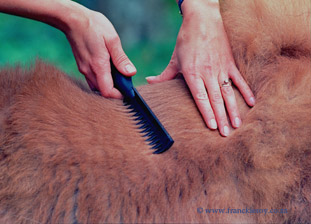
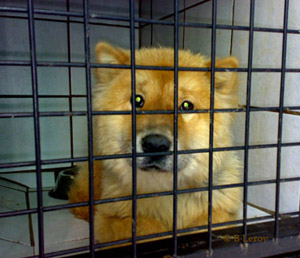
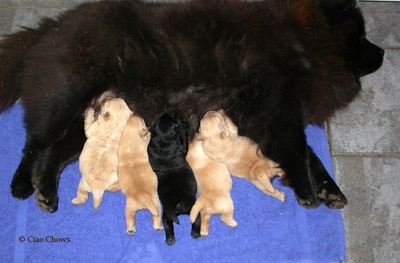
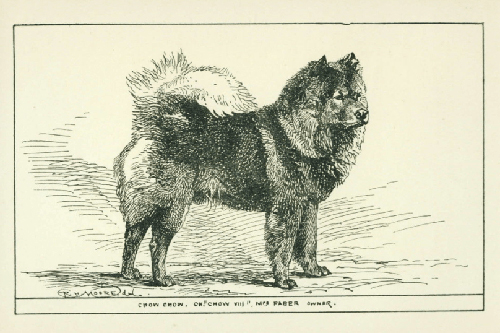 Learn more about the Chow Chow upon which the Breed standard is said to have been based.
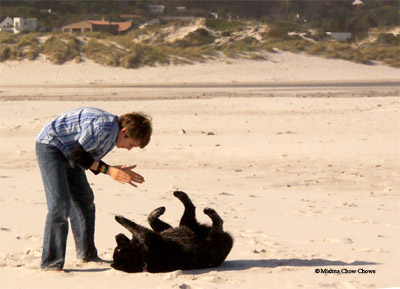
Learn about the Chow Chow's rich history on the Chow Chow Archives. This will help you understand the need for functional structure and moderate type.